
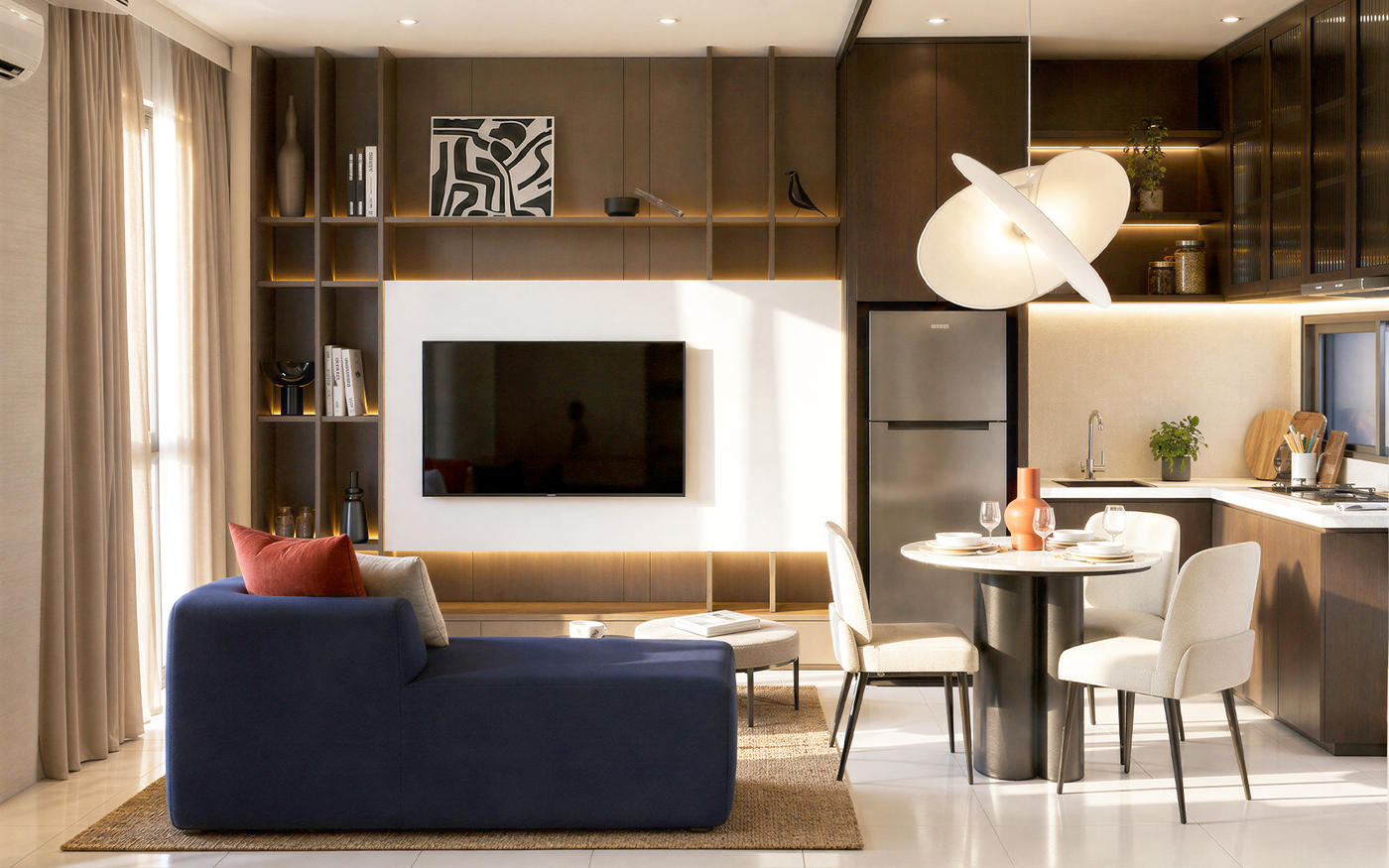
Earth tone colours are an increasingly popular choice for homes. Inspired by nature, such as soil, wood, stone, sand, and leaves, they make a home feel warm and calm, and they do not date quickly.
This article explains what earth tones are, palettes you can use, how to apply them to the exterior and interior, and common mistakes to avoid.
Earth tones are a group of colours drawn from natural elements. They tend to be warm and muted rather than bright, such as brown, cream, terracotta, olive green, and stone grey.
These colours combine easily with one another and with natural materials such as wood, rattan, stone, and exposed concrete. That is why earth tones are often used in minimalist, Japandi, and tropical homes.
Cream and sand. A safe base for walls, as they make spaces feel bright without the coldness of pure white.
Wood brown. Suits floors, frames, doors, or furniture, adding warmth.
Terracotta. A reddish orange like clay, ideal for accent walls, tiles, or plant pots.
Olive and sage green. Fresh tones that blend with plants.
Stone grey. Suits facades, floors, or concrete elements for a firmer look.
Off-white (ivory). A balancing colour so the palette does not feel too dark.
Choose one soft base colour for most of the facade walls, such as cream, sand, or light grey.
Add natural material accents, such as wood panels, breeze blocks, or natural stone in selected areas.
Use darker colours for supporting elements, such as frames, fences, or canopies, to give the facade depth.
Choose exterior-grade paint designed for heat and rain, as outdoor colours fade faster.
Bring in plants. Leaf green is the most natural earth tone accent for a facade.
Living room: cream or sand walls with a neutral sofa and terracotta or sage green cushion accents.
Bedroom: soft colours such as cream, light brown, or sage green help create a calm atmosphere.
Kitchen and dining room: wood or light brown cabinets with stone or grey worktops.
Bathroom: stone-textured or terracotta tiles with wood or plant accents.
Use the 60-30-10 rule. Around 60% dominant colour, 30% supporting colour, and 10% accent. For example, cream as the dominant colour, wood brown as the supporting colour, and terracotta as the accent.
Play with texture, not just colour. Wood, linen, rattan, and textured concrete bring a space to life even when the colours are similar.
Consider the room's light. Rooms with little natural light suit lighter earth tones so they do not feel cramped.
Test colours on the wall. Colours in a catalogue can look different under your home's lighting. Paint a small area and check it in the morning, afternoon, and evening.
Too many dark colours, making rooms feel small and gloomy.
Colours that are all too similar, with no contrast or texture, so rooms feel flat.
Ignoring existing floor and furniture colours when choosing wall colours.
Using interior paint outdoors, so the colour fades or peels quickly.
Earth tones are closely linked to Japanese-inspired homes, which value simplicity, natural materials, and a connection with nature. The combination is covered in more detail in Japandi Style and Modern Minimalist House.
One example can be seen at The New Hoshi, the latest development of the Asera Hoshi cluster in Kota Harapan Indah. Its design uses an earth tone palette, wood elements, textured concrete, and clean-lined facades. The New Hoshi offers two-storey homes:
Type H6: 3 bedrooms and 2 bathrooms.
Type H7: 4+1 bedrooms and 3+1 bathrooms.
Every home comes with a smart door lock and CCTV, priced from Rp 1 billion. Layout ideas for multi-storey homes are also in Two-Storey House Design.
What colours are earth tones?
Colours inspired by nature, such as cream, sand, wood brown, terracotta, olive green, sage green, stone grey, and off-white.
Do earth tones suit a small house?
Yes, as long as lighter earth tones such as cream or sand are the dominant colour, with darker shades used only as accents.
Which earth tones suit a house facade?
Cream, sand, or light grey as the base, with wood, natural stone, or dark brown accents.
How do I combine earth tones?
Use the 60-30-10 rule, pair them with natural material textures, and always test colours on the wall.
How are earth tones different from Japandi?
Earth tones are a group of colours, while Japandi is a design style. Japandi often uses an earth tone palette as its base.
For more information about The New Hoshi in Kota Harapan Indah, contact the Damai Putra Group Marketing Gallery via WhatsApp Official 0811 4466 888 or visit www.damaiputra.com.
This article explains what earth tones are, palettes you can use, how to apply them to the exterior and interior, and common mistakes to avoid.
What Are Earth Tone Colours?
Earth tones are a group of colours drawn from natural elements. They tend to be warm and muted rather than bright, such as brown, cream, terracotta, olive green, and stone grey.
These colours combine easily with one another and with natural materials such as wood, rattan, stone, and exposed concrete. That is why earth tones are often used in minimalist, Japandi, and tropical homes.
Earth Tone Palette Ideas
Cream and sand. A safe base for walls, as they make spaces feel bright without the coldness of pure white.
Wood brown. Suits floors, frames, doors, or furniture, adding warmth.
Terracotta. A reddish orange like clay, ideal for accent walls, tiles, or plant pots.
Olive and sage green. Fresh tones that blend with plants.
Stone grey. Suits facades, floors, or concrete elements for a firmer look.
Off-white (ivory). A balancing colour so the palette does not feel too dark.
Applying Earth Tones to the Exterior
Choose one soft base colour for most of the facade walls, such as cream, sand, or light grey.
Add natural material accents, such as wood panels, breeze blocks, or natural stone in selected areas.
Use darker colours for supporting elements, such as frames, fences, or canopies, to give the facade depth.
Choose exterior-grade paint designed for heat and rain, as outdoor colours fade faster.
Bring in plants. Leaf green is the most natural earth tone accent for a facade.
Applying Earth Tones to the Interior
Living room: cream or sand walls with a neutral sofa and terracotta or sage green cushion accents.
Bedroom: soft colours such as cream, light brown, or sage green help create a calm atmosphere.
Kitchen and dining room: wood or light brown cabinets with stone or grey worktops.
Bathroom: stone-textured or terracotta tiles with wood or plant accents.
Tips for Combining Earth Tones
Use the 60-30-10 rule. Around 60% dominant colour, 30% supporting colour, and 10% accent. For example, cream as the dominant colour, wood brown as the supporting colour, and terracotta as the accent.
Play with texture, not just colour. Wood, linen, rattan, and textured concrete bring a space to life even when the colours are similar.
Consider the room's light. Rooms with little natural light suit lighter earth tones so they do not feel cramped.
Test colours on the wall. Colours in a catalogue can look different under your home's lighting. Paint a small area and check it in the morning, afternoon, and evening.
Common Mistakes
Too many dark colours, making rooms feel small and gloomy.
Colours that are all too similar, with no contrast or texture, so rooms feel flat.
Ignoring existing floor and furniture colours when choosing wall colours.
Using interior paint outdoors, so the colour fades or peels quickly.
Earth Tones and Japanese-Inspired Homes
Earth tones are closely linked to Japanese-inspired homes, which value simplicity, natural materials, and a connection with nature. The combination is covered in more detail in Japandi Style and Modern Minimalist House.
One example can be seen at The New Hoshi, the latest development of the Asera Hoshi cluster in Kota Harapan Indah. Its design uses an earth tone palette, wood elements, textured concrete, and clean-lined facades. The New Hoshi offers two-storey homes:
Type H6: 3 bedrooms and 2 bathrooms.
Type H7: 4+1 bedrooms and 3+1 bathrooms.
Every home comes with a smart door lock and CCTV, priced from Rp 1 billion. Layout ideas for multi-storey homes are also in Two-Storey House Design.
Frequently Asked Questions
What colours are earth tones?
Colours inspired by nature, such as cream, sand, wood brown, terracotta, olive green, sage green, stone grey, and off-white.
Do earth tones suit a small house?
Yes, as long as lighter earth tones such as cream or sand are the dominant colour, with darker shades used only as accents.
Which earth tones suit a house facade?
Cream, sand, or light grey as the base, with wood, natural stone, or dark brown accents.
How do I combine earth tones?
Use the 60-30-10 rule, pair them with natural material textures, and always test colours on the wall.
How are earth tones different from Japandi?
Earth tones are a group of colours, while Japandi is a design style. Japandi often uses an earth tone palette as its base.
For more information about The New Hoshi in Kota Harapan Indah, contact the Damai Putra Group Marketing Gallery via WhatsApp Official 0811 4466 888 or visit www.damaiputra.com.