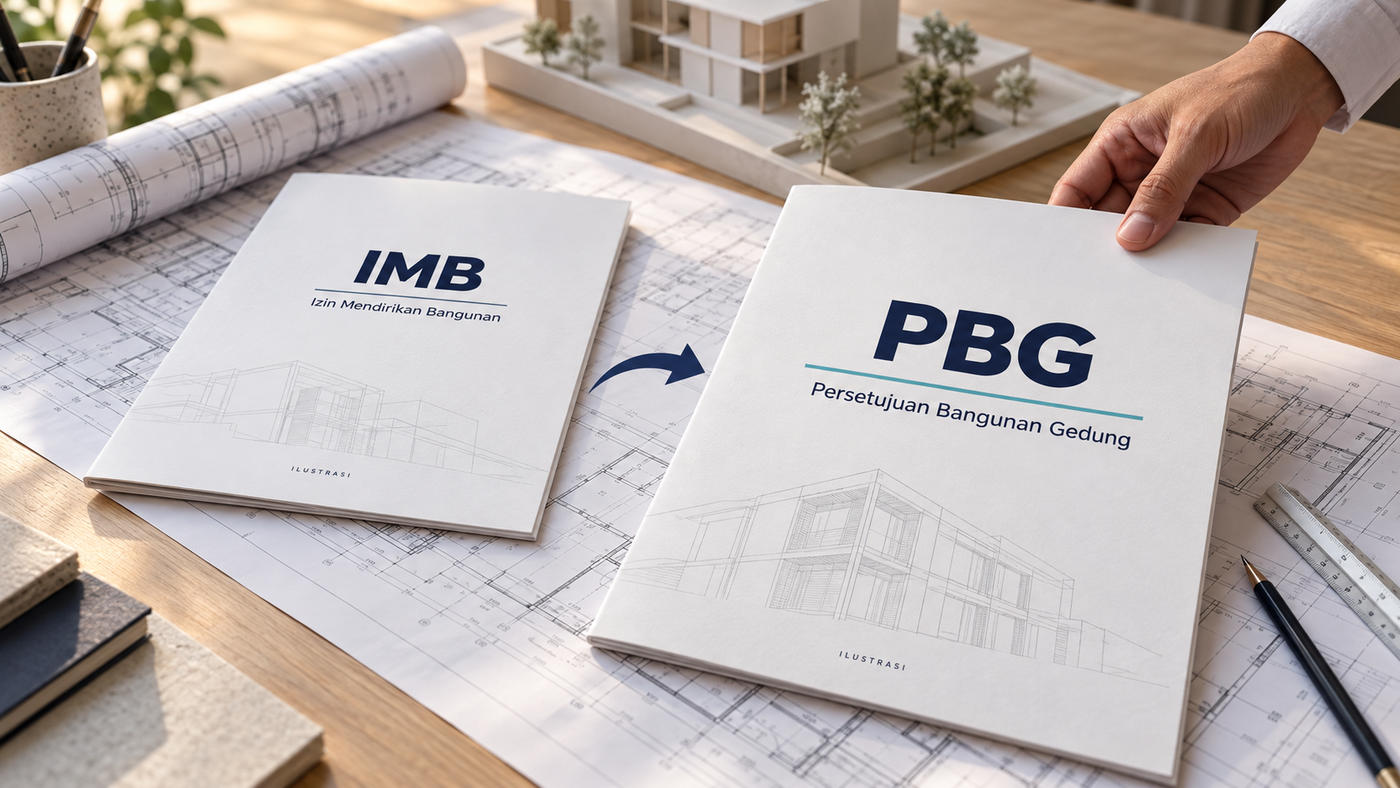
Since 2021, the term IMB (building permit) has gradually been replaced by PBG (Building Approval). Many homeowners are still unsure: what is the difference, is an old IMB still valid, and when is a PBG required?
This article explains what a PBG is, how it differs from an IMB, when it is needed, and how to apply for one online.
A Persetujuan Bangunan Gedung (PBG), or Building Approval, is the government's approval for a building owner to construct, alter, extend, reduce, and/or maintain a building in line with technical building standards.
PBG is governed by Government Regulation Number 16 of 2021 on Buildings, an implementing regulation of the Job Creation Law. Since this regulation took effect, PBG has replaced the role of the IMB.
Nature: an IMB is a permit granted before construction. A PBG is an approval focused on whether the building plan meets technical standards.
Assessment: a PBG assesses the building's technical plans, such as architecture, structure, and utilities, through a technical consultation process.
Process: PBG applications are made online through the Building Management Information System (SIMBG).
Follow-up: once construction is complete, certain building types continue to a Certificate of Fitness for Use (SLF) as proof the building is fit to occupy.
Yes. An IMB issued before Government Regulation Number 16 of 2021 took effect remains valid. Homeowners who already have an IMB do not need to replace it with a PBG as long as the building is not altered.
A PBG is only needed when there is a change to the building, such as adding a storey, extending the building, altering the structure, or changing its function.
What about a building that already stands but has neither an IMB nor a PBG? Under Government Regulation Number 16 of 2021, such a building must first obtain an SLF in order to obtain a PBG.
Building a new house on vacant land.
Adding a storey.
Extending the building, for example adding a bedroom or garage.
Altering the structure, such as columns, beams, or foundations.
Changing the building's function, for example from a home to a business premises.
Light renovations that do not change the main structure, such as repainting, replacing tiles, or repairing a ceiling, generally do not require a PBG. A guide to planning a renovation is in Home Renovation Tips.
Administrative documents:
The applicant's ID card.
Proof of land ownership or control, such as a certificate.
Building data, such as function, area, number of storeys, and height.
Technical plan documents:
Architectural drawings, such as floor plans, elevations, and sections.
Structural drawings and calculations.
Utility drawings, such as clean water, wastewater, drainage, and electrical installations.
Detailed requirements may differ by region, so check through SIMBG or your local technical office.
1. Open the SIMBG site at simbg.pu.go.id and register an account with your details and an active email.
2. Create a new application and choose the PBG type, such as new construction or building alteration.
3. Fill in the building and land data.
4. Upload the administrative and technical plan documents.
5. Attend the technical consultation scheduled through SIMBG. Consultation at the planning stage is free of charge.
6. Once the plan is declared to meet technical standards, receive the Regional Levy Assessment (SKRD) and pay the PBG levy.
7. The PBG is issued once payment is confirmed.
The cost of a PBG is a regional levy set by each regency or city government through regional regulations. It is calculated based on floor area, building function, number of storeys, and the indices that apply in that region. The exact amount is therefore only known once the SKRD is issued.
When buying a home, an IMB or PBG shows the building was constructed in line with regulations. It is also needed in various processes, such as applying for a mortgage and upgrading an SHGB title to SHM, as discussed in SHM vs SHGB.
For new homes from developers, a PBG is also one of the requirements before a conditional sale and purchase agreement (PPJB) can be signed. This is explained in PPJB vs AJB.
What is a PBG?
A Building Approval, the government's approval to construct, alter, extend, reduce, or maintain a building in line with technical standards, replacing the IMB.
Does an old IMB need to be replaced with a PBG?
No, as long as the building is not altered. An issued IMB remains valid.
Where do I apply for a PBG?
Online through SIMBG at simbg.pu.go.id, with a technical consultation process involving the local government.
How much does a PBG cost?
It is a regional levy set by each region's regulations, calculated based on floor area, function, and number of storeys.
Does a small renovation need a PBG?
Generally not, as long as it does not change the main structure, floor area, or function of the building.
This article is general information. Requirements, procedures, and levy amounts may differ by region, so please confirm with your local technical office.
For more information about Damai Putra Group homes, contact the Damai Putra Group Marketing Gallery via WhatsApp Official 0811 4466 888 or visit www.damaiputra.com.
This article explains what a PBG is, how it differs from an IMB, when it is needed, and how to apply for one online.
What Is a PBG?
A Persetujuan Bangunan Gedung (PBG), or Building Approval, is the government's approval for a building owner to construct, alter, extend, reduce, and/or maintain a building in line with technical building standards.
PBG is governed by Government Regulation Number 16 of 2021 on Buildings, an implementing regulation of the Job Creation Law. Since this regulation took effect, PBG has replaced the role of the IMB.
How Is a PBG Different from an IMB?
Nature: an IMB is a permit granted before construction. A PBG is an approval focused on whether the building plan meets technical standards.
Assessment: a PBG assesses the building's technical plans, such as architecture, structure, and utilities, through a technical consultation process.
Process: PBG applications are made online through the Building Management Information System (SIMBG).
Follow-up: once construction is complete, certain building types continue to a Certificate of Fitness for Use (SLF) as proof the building is fit to occupy.
Is an Old IMB Still Valid?
Yes. An IMB issued before Government Regulation Number 16 of 2021 took effect remains valid. Homeowners who already have an IMB do not need to replace it with a PBG as long as the building is not altered.
A PBG is only needed when there is a change to the building, such as adding a storey, extending the building, altering the structure, or changing its function.
What about a building that already stands but has neither an IMB nor a PBG? Under Government Regulation Number 16 of 2021, such a building must first obtain an SLF in order to obtain a PBG.
When Is a PBG Required?
Building a new house on vacant land.
Adding a storey.
Extending the building, for example adding a bedroom or garage.
Altering the structure, such as columns, beams, or foundations.
Changing the building's function, for example from a home to a business premises.
Light renovations that do not change the main structure, such as repainting, replacing tiles, or repairing a ceiling, generally do not require a PBG. A guide to planning a renovation is in Home Renovation Tips.
Documents Usually Required
Administrative documents:
The applicant's ID card.
Proof of land ownership or control, such as a certificate.
Building data, such as function, area, number of storeys, and height.
Technical plan documents:
Architectural drawings, such as floor plans, elevations, and sections.
Structural drawings and calculations.
Utility drawings, such as clean water, wastewater, drainage, and electrical installations.
Detailed requirements may differ by region, so check through SIMBG or your local technical office.
How to Apply for a PBG Online via SIMBG
1. Open the SIMBG site at simbg.pu.go.id and register an account with your details and an active email.
2. Create a new application and choose the PBG type, such as new construction or building alteration.
3. Fill in the building and land data.
4. Upload the administrative and technical plan documents.
5. Attend the technical consultation scheduled through SIMBG. Consultation at the planning stage is free of charge.
6. Once the plan is declared to meet technical standards, receive the Regional Levy Assessment (SKRD) and pay the PBG levy.
7. The PBG is issued once payment is confirmed.
How Much Does a PBG Cost?
The cost of a PBG is a regional levy set by each regency or city government through regional regulations. It is calculated based on floor area, building function, number of storeys, and the indices that apply in that region. The exact amount is therefore only known once the SKRD is issued.
Why Does a PBG Matter When Buying a Home?
When buying a home, an IMB or PBG shows the building was constructed in line with regulations. It is also needed in various processes, such as applying for a mortgage and upgrading an SHGB title to SHM, as discussed in SHM vs SHGB.
For new homes from developers, a PBG is also one of the requirements before a conditional sale and purchase agreement (PPJB) can be signed. This is explained in PPJB vs AJB.
Frequently Asked Questions
What is a PBG?
A Building Approval, the government's approval to construct, alter, extend, reduce, or maintain a building in line with technical standards, replacing the IMB.
Does an old IMB need to be replaced with a PBG?
No, as long as the building is not altered. An issued IMB remains valid.
Where do I apply for a PBG?
Online through SIMBG at simbg.pu.go.id, with a technical consultation process involving the local government.
How much does a PBG cost?
It is a regional levy set by each region's regulations, calculated based on floor area, function, and number of storeys.
Does a small renovation need a PBG?
Generally not, as long as it does not change the main structure, floor area, or function of the building.
This article is general information. Requirements, procedures, and levy amounts may differ by region, so please confirm with your local technical office.
For more information about Damai Putra Group homes, contact the Damai Putra Group Marketing Gallery via WhatsApp Official 0811 4466 888 or visit www.damaiputra.com.