
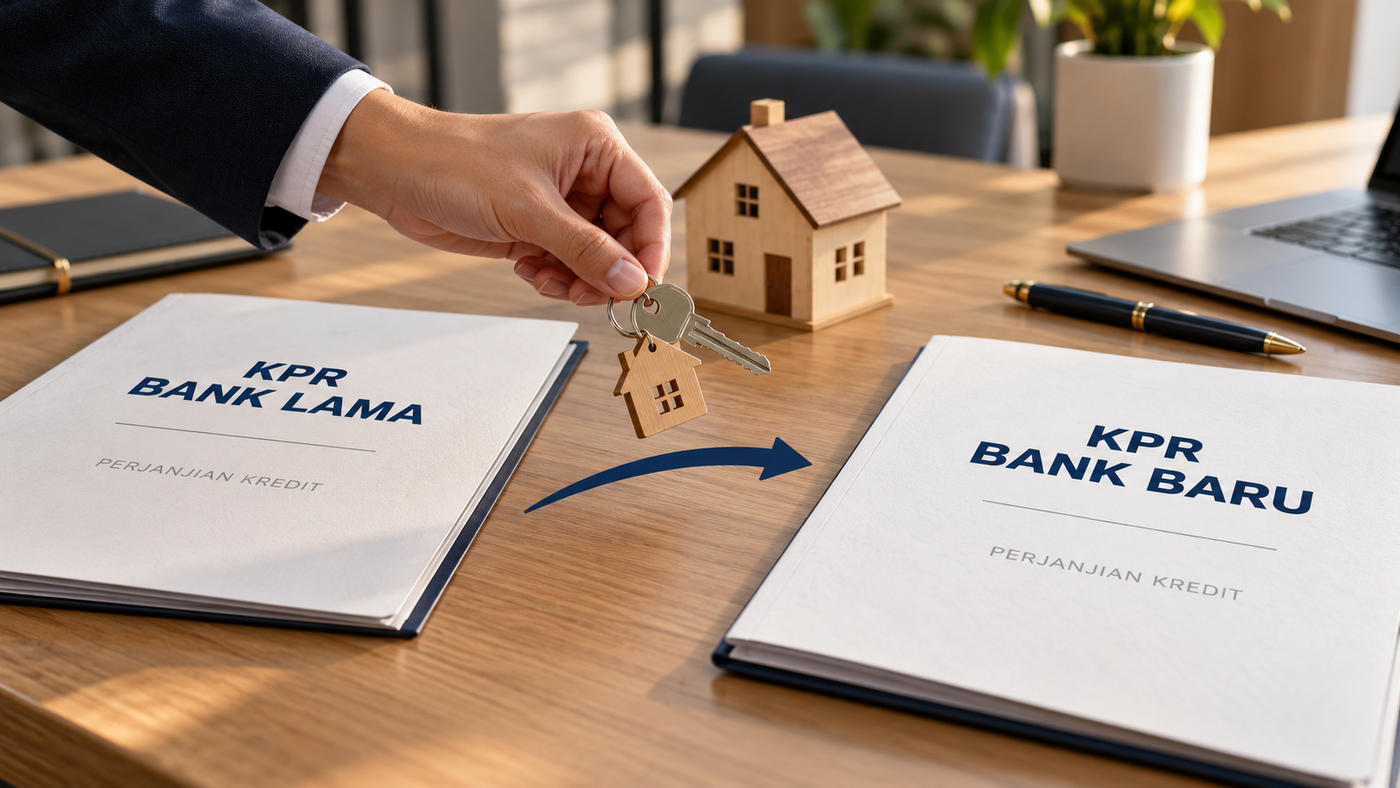
The term mortgage take over (take over KPR) comes up in two quite different situations: when a homeowner wants to move their mortgage to another bank with a lower rate, and when someone buys a resale home that is still being paid off. Both are legitimate and common, but the process, costs, and risks differ.
This article covers the types of mortgage take over, how to do it safely, the likely costs, and the risks to watch for.
A mortgage take over is the transfer of a home loan, either to another bank or to another borrower. There are three common forms:
1. Bank-to-bank take over. The borrower moves the remaining mortgage to a new bank offering better terms. The owner stays the same; only the lender changes.
2. Borrower-to-borrower take over. A buyer of a resale home takes over the remaining mortgage from the previous owner, and the loan is transferred into the buyer's name after the bank's assessment.
3. Take over with top up. The borrower applies for a loan larger than the remaining principal at the old bank, and the difference is paid out as additional funds after the property is revalued.
A bank-to-bank take over is usually done to get a lower interest rate, for example when the fixed-rate period at the old bank has ended and the floating rate feels heavy. Other reasons include adjusting the tenor or switching from a conventional to a sharia mortgage.
General steps:
1. Compare offers from several banks, including rates, tenors, and fees.
2. Prepare your documents and apply to the new bank.
3. The new bank assesses your credit and revalues the property.
4. Once approved, the new bank pays off the remaining mortgage at the old bank.
5. A new credit agreement is signed before a notary.
When buying a resale home that is still under a mortgage, the safe route is an official take over through the bank, not a private agreement between seller and buyer.
General steps:
1. Seller and buyer agree on the price, including the difference between the sale price and the remaining principal.
2. The buyer applies for a loan, either at the same bank or another bank.
3. The bank assesses the buyer's credit and values the property, then issues a credit approval.
4. The seller's loan is closed, then the AJB and a new credit agreement in the buyer's name are signed before a notary/PPAT.
5. The certificate is transferred into the buyer's name.
The AJB is explained in PPJB vs AJB, and title transfer costs in Land Title Transfer Costs 2026.
Some people choose an informal take over, where the buyer simply continues the seller's instalments without involving the bank. This is very risky:
The certificate stays in the seller's name and is still held by the bank as collateral.
The buyer has little legal protection, as the only proof is often a receipt or a simple agreement.
Disputes can arise if the seller dies, faces legal problems, or acts in bad faith.
Transferring the title later is difficult, as it requires the seller's presence and documents.
So make sure every mortgage take over involves the bank and a notary/PPAT.
Amounts differ between banks, but the usual components are:
Early repayment penalty at the old bank, generally around 1% to 3% of the remaining principal.
Provision fee at the new bank, generally around 0.5% to 1% of the loan amount.
Appraisal fee for revaluing the property.
Administration fee at the new bank.
Notary/PPAT fees for the credit agreement and, in a borrower-to-borrower take over, for the AJB and title transfer.
Insurance premiums for life and fire cover as required by the bank.
Taxes such as BPHTB for the buyer and PPh for the seller, in a borrower-to-borrower take over because ownership changes.
A bank-to-bank take over is worth considering if your total instalment savings over the remaining term exceed all the take over costs. A simple way to check:
1. Work out the monthly instalment difference between the old and new bank.
2. Multiply it by the number of months the new rate applies.
3. Compare the result with the total take over costs.
Also check how long the new bank's fixed rate lasts and what the floating rate will be afterwards. You can simulate instalments with the 2026 Mortgage Calculator.
ID card, family card, tax ID (NPWP), and marriage certificate if married.
Payslips or proof of income, plus bank statements.
Copies of the certificate, building permit (IMB or PBG), and land tax notice (SPPT PBB).
Proof of the latest mortgage payment and a statement of the remaining loan from the old bank.
As the bank will reassess your credit history, make sure your record is clean. How to check is covered in How to Check SLIK OJK Online.
What is a mortgage take over?
The transfer of a mortgage to another bank or another borrower, for example when buying a resale home still under a mortgage.
Is an informal take over safe?
It is not recommended. The certificate stays in the seller's name and the buyer has little legal protection. Use the official route through the bank and a notary/PPAT.
How much does a mortgage take over cost?
It depends on the bank, but usually includes an early repayment penalty, provision, appraisal, administration, notary fees, insurance, and taxes if ownership changes.
When should I move my mortgage to another bank?
When the total instalment savings exceed all take over costs, for example after the fixed-rate period ends.
Can I switch from a conventional to a sharia mortgage?
Yes, as long as the sharia bank approves the application after its financing assessment.
This article is general information. Requirements and fees differ between banks, so please confirm directly with the bank concerned.
For more information about Damai Putra Group homes, contact the Damai Putra Group Marketing Gallery via WhatsApp Official 0811 4466 888 or visit www.damaiputra.com.
This article covers the types of mortgage take over, how to do it safely, the likely costs, and the risks to watch for.
What Is a Mortgage Take Over?
A mortgage take over is the transfer of a home loan, either to another bank or to another borrower. There are three common forms:
1. Bank-to-bank take over. The borrower moves the remaining mortgage to a new bank offering better terms. The owner stays the same; only the lender changes.
2. Borrower-to-borrower take over. A buyer of a resale home takes over the remaining mortgage from the previous owner, and the loan is transferred into the buyer's name after the bank's assessment.
3. Take over with top up. The borrower applies for a loan larger than the remaining principal at the old bank, and the difference is paid out as additional funds after the property is revalued.
Bank-to-Bank Take Over
A bank-to-bank take over is usually done to get a lower interest rate, for example when the fixed-rate period at the old bank has ended and the floating rate feels heavy. Other reasons include adjusting the tenor or switching from a conventional to a sharia mortgage.
General steps:
1. Compare offers from several banks, including rates, tenors, and fees.
2. Prepare your documents and apply to the new bank.
3. The new bank assesses your credit and revalues the property.
4. Once approved, the new bank pays off the remaining mortgage at the old bank.
5. A new credit agreement is signed before a notary.
Borrower-to-Borrower Take Over for a Resale Home
When buying a resale home that is still under a mortgage, the safe route is an official take over through the bank, not a private agreement between seller and buyer.
General steps:
1. Seller and buyer agree on the price, including the difference between the sale price and the remaining principal.
2. The buyer applies for a loan, either at the same bank or another bank.
3. The bank assesses the buyer's credit and values the property, then issues a credit approval.
4. The seller's loan is closed, then the AJB and a new credit agreement in the buyer's name are signed before a notary/PPAT.
5. The certificate is transferred into the buyer's name.
The AJB is explained in PPJB vs AJB, and title transfer costs in Land Title Transfer Costs 2026.
The Risks of an Informal Take Over
Some people choose an informal take over, where the buyer simply continues the seller's instalments without involving the bank. This is very risky:
The certificate stays in the seller's name and is still held by the bank as collateral.
The buyer has little legal protection, as the only proof is often a receipt or a simple agreement.
Disputes can arise if the seller dies, faces legal problems, or acts in bad faith.
Transferring the title later is difficult, as it requires the seller's presence and documents.
So make sure every mortgage take over involves the bank and a notary/PPAT.
Likely Costs of a Mortgage Take Over
Amounts differ between banks, but the usual components are:
Early repayment penalty at the old bank, generally around 1% to 3% of the remaining principal.
Provision fee at the new bank, generally around 0.5% to 1% of the loan amount.
Appraisal fee for revaluing the property.
Administration fee at the new bank.
Notary/PPAT fees for the credit agreement and, in a borrower-to-borrower take over, for the AJB and title transfer.
Insurance premiums for life and fire cover as required by the bank.
Taxes such as BPHTB for the buyer and PPh for the seller, in a borrower-to-borrower take over because ownership changes.
When Does a Bank-to-Bank Take Over Make Sense?
A bank-to-bank take over is worth considering if your total instalment savings over the remaining term exceed all the take over costs. A simple way to check:
1. Work out the monthly instalment difference between the old and new bank.
2. Multiply it by the number of months the new rate applies.
3. Compare the result with the total take over costs.
Also check how long the new bank's fixed rate lasts and what the floating rate will be afterwards. You can simulate instalments with the 2026 Mortgage Calculator.
Documents Usually Required
ID card, family card, tax ID (NPWP), and marriage certificate if married.
Payslips or proof of income, plus bank statements.
Copies of the certificate, building permit (IMB or PBG), and land tax notice (SPPT PBB).
Proof of the latest mortgage payment and a statement of the remaining loan from the old bank.
As the bank will reassess your credit history, make sure your record is clean. How to check is covered in How to Check SLIK OJK Online.
Frequently Asked Questions
What is a mortgage take over?
The transfer of a mortgage to another bank or another borrower, for example when buying a resale home still under a mortgage.
Is an informal take over safe?
It is not recommended. The certificate stays in the seller's name and the buyer has little legal protection. Use the official route through the bank and a notary/PPAT.
How much does a mortgage take over cost?
It depends on the bank, but usually includes an early repayment penalty, provision, appraisal, administration, notary fees, insurance, and taxes if ownership changes.
When should I move my mortgage to another bank?
When the total instalment savings exceed all take over costs, for example after the fixed-rate period ends.
Can I switch from a conventional to a sharia mortgage?
Yes, as long as the sharia bank approves the application after its financing assessment.
This article is general information. Requirements and fees differ between banks, so please confirm directly with the bank concerned.
For more information about Damai Putra Group homes, contact the Damai Putra Group Marketing Gallery via WhatsApp Official 0811 4466 888 or visit www.damaiputra.com.